

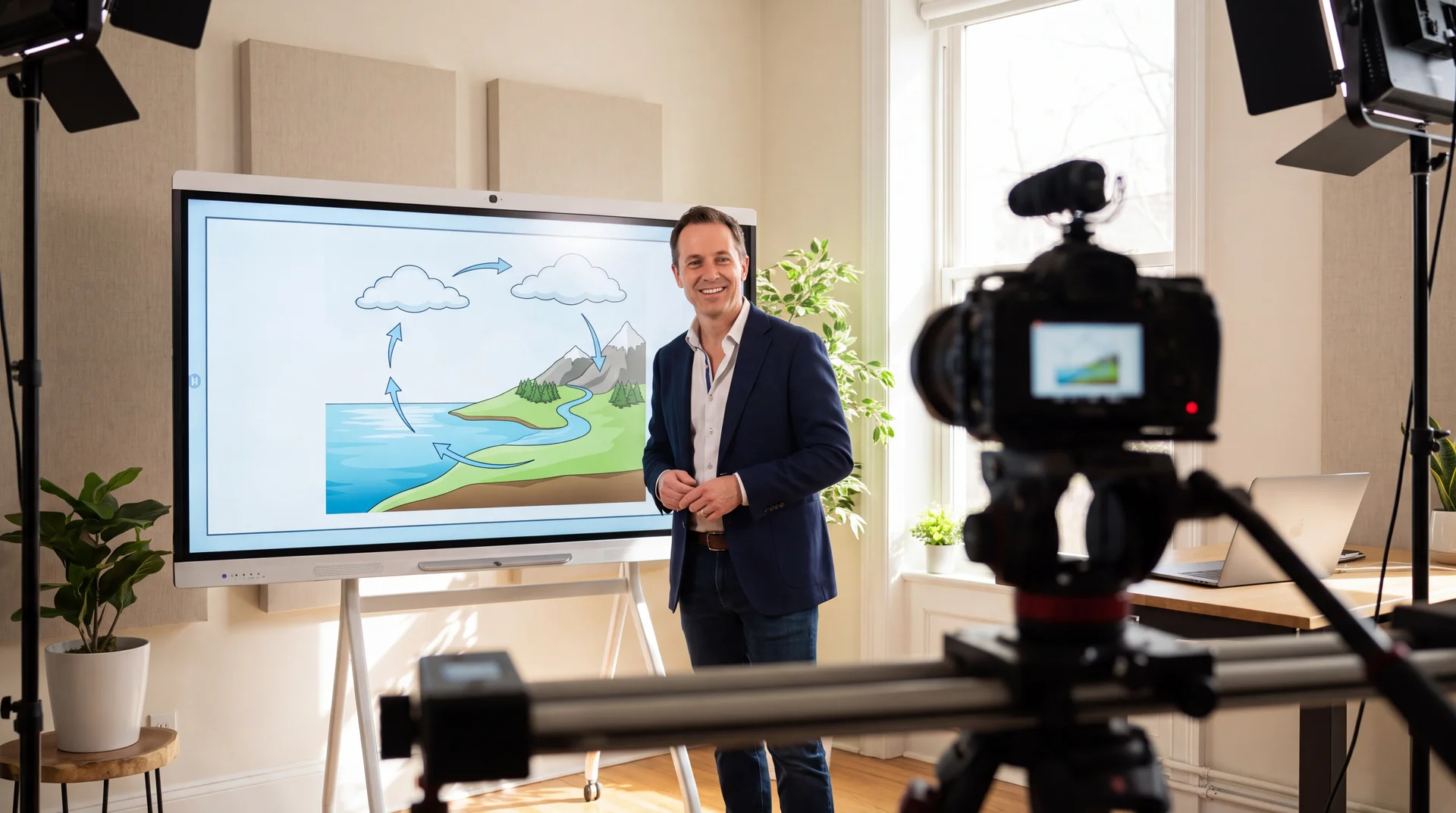
- 90%
- Lower cost per course module
- 100+
- Languages with lip-synced dubbing
- 1
- Presenter across the whole catalogue
Training content ages the moment the product changes, and re-recording it is why so much of it does not get updated. BeHooked separates the lesson from the recording: the same module regenerates with a new script, a new language or a new presenter without anyone stepping in front of a camera again.
Training ages the moment the product changes.
A module is recorded once, the product ships a new release, and now the catalogue teaches something that is not true any more — because re-recording means booking the presenter, the studio and the edit all over again. So it does not get updated, and the training quietly drifts out of date.
How it goes today
- Updating a module means re-recording the module
- Each language is a new recording session and new talent
- Presenters change and the catalogue stops matching itself
- Production capacity decides how much training exists
How it goes here
- Updating a module means editing the script
- Each language is a dub of the module you already have
- One virtual instructor holds across every module
- The curriculum decides how much training exists
One script, every language.
A module generated from a script with one virtual instructor, then dubbed with lip-sync adjusted to each new track.
- Write the module — no studio slot, no presenter availability
- Cast one instructor and keep them across the catalogue
- Dub into forty languages with lip-sync on the original footage
Whatever the module calls for, it is here.
The studios a learning team reaches for, from script to localised catalogue.




Use them in whatever order the module actually needs, not a fixed sequence.
Made for a catalogue that has to stay current.
Three things that separate the lesson from the recording.
Updating a module means editing the script
The recording is not the asset — the script is. A changed line is a re-render rather than a re-shoot, which is why the catalogue can actually stay current.
One instructor across two years of modules
A trained presenter is reusable, so a catalogue built module by module still reads as one course rather than as whoever was available that quarter.
Localising without re-recording
Dub the finished module into forty languages with lip-sync adjusted to the new track, rather than shooting each market separately.
How the work actually moves.
Four stages of one production run, in the order they happen.
-
Write the module, not the shoot
A script or an outline is the input. There is no studio slot, no presenter availability and no reshoot for a changed line.
-
Cast one instructor and keep them
The same virtual presenter fronts every module, so a catalogue built over two years still looks like one course.
-
Localise without re-recording
Dub the finished module into forty languages with lip-sync adjusted to the new track, rather than shooting each market separately.
-
Wire the whole thing as a pipeline
Script, render, dub and publish become one saved Nodeflow, so the next module is a run rather than a project.
Made for learning teams, by BeHooked
Course stills generated on this surface, from diagrams to the classroom.
Not just us saying it.
What education & training say after the first month.

Our onboarding catalogue used to go stale between releases. Now a product change is a script edit, and the localised versions land the same week rather than the next quarter.

Built for Growth at Every Stage
Every plan includes every model and every feature. Plans only change how many credits you get and how many generations run at once.
- Credits refresh monthly
- Top-up additional credits anytime
- Unused credits don't roll over

Not ready for the commitment?

FAQs
Questions, answered.
The things education & training ask before they start.
Can I translate courses I have already recorded?
Yes. Upload the existing video or audio, choose the target languages, and the localised track comes back with lip-sync applied to the original footage.
How do teams collaborate on a module?
Every output lands in one Library with its full generation history, so a module can be picked up and re-run later. Shared team workspaces, for several people on one project, are on the way.
Does the presenter stay consistent across modules?
Yes. A trained presenter is reusable, which is the point — a catalogue built module by module still reads as one course.
Other ways teams use it.
Nothing is gated by audience — these are the same workspace, arranged for a different week.